
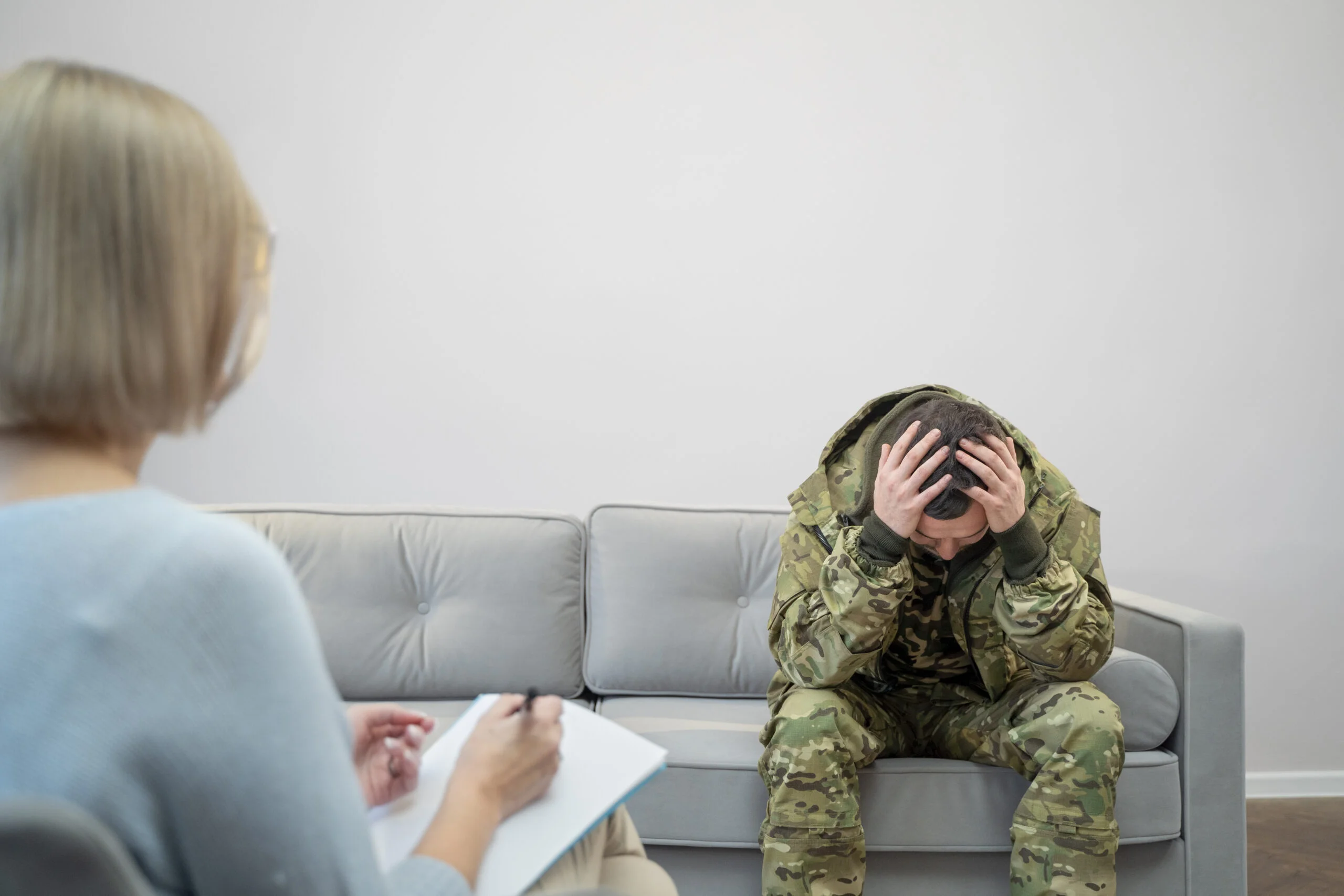
The short answer is yes. For many people, online therapy helps manage PTSD effectively, and sometimes it feels safer than an office ever could. Maybe you flinch at sudden noises. Maybe you dread bedtime because the nightmares wait there. Maybe you have carried something heavy for years and told no one. If PTSD therapy online has crossed your mind, you are exactly where you should be. In this post, we explain how it works, which treatments are used, and what you can expect from the first call to the first real breakthrough.
What Is PTSD, Really?
Post-traumatic stress disorder develops after frightening or overwhelming events. Symptoms include flashbacks, nightmares, hypervigilance, avoidance, and a constant sense that danger is close. About 6 in 100 people experience PTSD at some point in their lives, according to the VA National Center for PTSD. So if you feel alone, the numbers say you are not.
Here is what trauma does that people rarely explain. It teaches the body to treat an old danger as a present one. Your heart races in a grocery store. Your stomach drops at a smell. Your mind is not broken. It is stuck on guard duty, long after the threat has passed.
Complex PTSD, which follows prolonged trauma such as ongoing abuse or violence, often reaches further. It can shape relationships, work, and your sense of who you are. That is why treatment has to go deeper than a few coping tips.
And avoidance, one of the main symptoms, can quietly shrink your life. You stop driving certain roads. You skip gatherings. You say no to things you once loved, because saying yes feels risky. Over time the world gets smaller and the loneliness gets bigger. Treatment aims to widen that world again, one manageable step at a time.
Why Might Online Therapy Feel Safer Than an Office?
Trauma takes away control. Online therapy hands some of it back. You choose your space. You sit on your own couch, with your own blanket, in a room where you know every exit. You skip the drive, the waiting room, and the fear of being seen walking into a clinic.
That sense of safety often lets people open up sooner. And opening up is where healing starts. For many survivors, the first few sessions in an unfamiliar office are spent just surviving the room. At home, that energy can go toward the work itself.
There is a privacy benefit too. Confidential, compassionate, nonjudgmental care means stigma has one fewer place to hide. Your treatment fits around your life instead of taking it over.
It also helps with practical hurdles. No childcare to arrange, no time off work to explain, and no long drive home after a session that stirred up hard feelings. You can step into your kitchen, make tea, and let yourself settle. That small after-session comfort is something an office visit rarely offers, and for people processing trauma it can make the difference between continuing and quitting.
Which Therapies Treat PTSD, and Do They Work by Video?
Several approaches have strong evidence behind them, and they translate well to telehealth:
- Cognitive Behavioral Therapy helps you reframe thoughts that trauma has twisted
- EMDR helps the brain process painful memories with less emotional charge
- Prolonged Exposure Therapy helps you face triggers gradually, with support
- Medication management can ease symptoms such as anxiety and sleep disruption
A skilled therapist guides each step by video, and a physician coordinates medication when it fits. Video does not dilute the work. It simply removes the travel.
And between sessions, you can practice what you learn in the very place where symptoms tend to strike, your own home. That makes skills like grounding and paced breathing easier to use when they matter most.
What Makes a Personalized PTSD Program Different?
Two trauma survivors rarely need the same plan. One needs help with nightmares first. Another needs to rebuild trust in relationships. A third needs to stop drinking to quiet the alarm before anything else can move.
Our PTSD treatment personalized programs start with intensive listening. We learn your history, your symptoms, and your goals. Then we build a plan around you instead of handing you a script. That plan adjusts over time, because healing does not follow a straight line.
How long does it take? Some people see change in weeks. Others need months. Both are normal, and neither is failure. What matters is that someone is paying attention and adjusting the plan along the way.
Can Online Care Treat PTSD and Addiction Together?
It can, and it should. Trauma often travels with anxiety, depression, and substance use. A drink at night, a pill to sleep, something to take the edge off. Many survivors reach for relief wherever they can find it. Treating only the PTSD leaves the substance use running underneath, and treating only the substance use leaves the trauma untouched.
We treat the whole picture. Integrated medication management and therapy work together in one coordinated plan, led by a physician team with over 40 years of successful experience and daily research into what works and what does not.
What Happens When a Hard Moment Hits Between Sessions?
Trauma does not keep office hours. A bad night can arrive at 2 a.m. on a Sunday. That is why a front-line physician is available around the clock for our clients. You are not left waiting for Tuesday.
And if you are ever in immediate danger, call or text 988, the Suicide and Crisis Lifeline, or call 911. You deserve fast help, always.
You are not alone in this. We bring hope, help, and healing. Do it now. Call or text 833-811-9111 to start with a free assessment.
Why Heal With Overcoming Addictions LLC?
Picture sleeping through the night. Walking into a crowded room without scanning for exits. Hearing a loud noise and feeling only surprise. That is not asking too much. It is what treatment can move you toward.
Overcoming Addictions LLC offers physician-led, personalized, confidential care from your own home, anywhere in Minnesota. We listen first, plan carefully, and stay reachable. The past does not have to run your present. Your first step is one call.
Frequently Asked Questions
- Is online therapy as effective as in-person therapy for PTSD?
For many people, yes. Evidence-based approaches such as CBT and EMDR can be delivered by video, and many clients feel safer in their own space.
- What if I have a crisis between sessions?
A front-line physician is available around the clock. If you are in immediate danger, call or text 988 or call 911.
- How long does PTSD treatment take?
It varies. Some people improve in weeks and others need months. Your plan is reviewed regularly and adjusted to your progress.
- Can medication help with PTSD?
It can help ease symptoms such as anxiety and poor sleep. Your physician will discuss whether medication fits your plan.
- Do you treat PTSD along with addiction?
Yes. Trauma and substance use often overlap, and we treat them together in one coordinated plan.