

According to the data of 2024, in the city of Minneapolis, the death rate caused by opioid overdoses is 179, which is a decline of 26% from last year. This is excellent news, however, this still translates into three deaths per week.
It should be noted that there was a person behind every statistic who had decided to cope with his problem. In most cases, they made repeated attempts. The difference between individuals who successfully overcome the addiction and those who cannot is not their willpower or personal qualities. It is usually the right treatment that is provided and the time to let the brain stabilize its chemical balance.
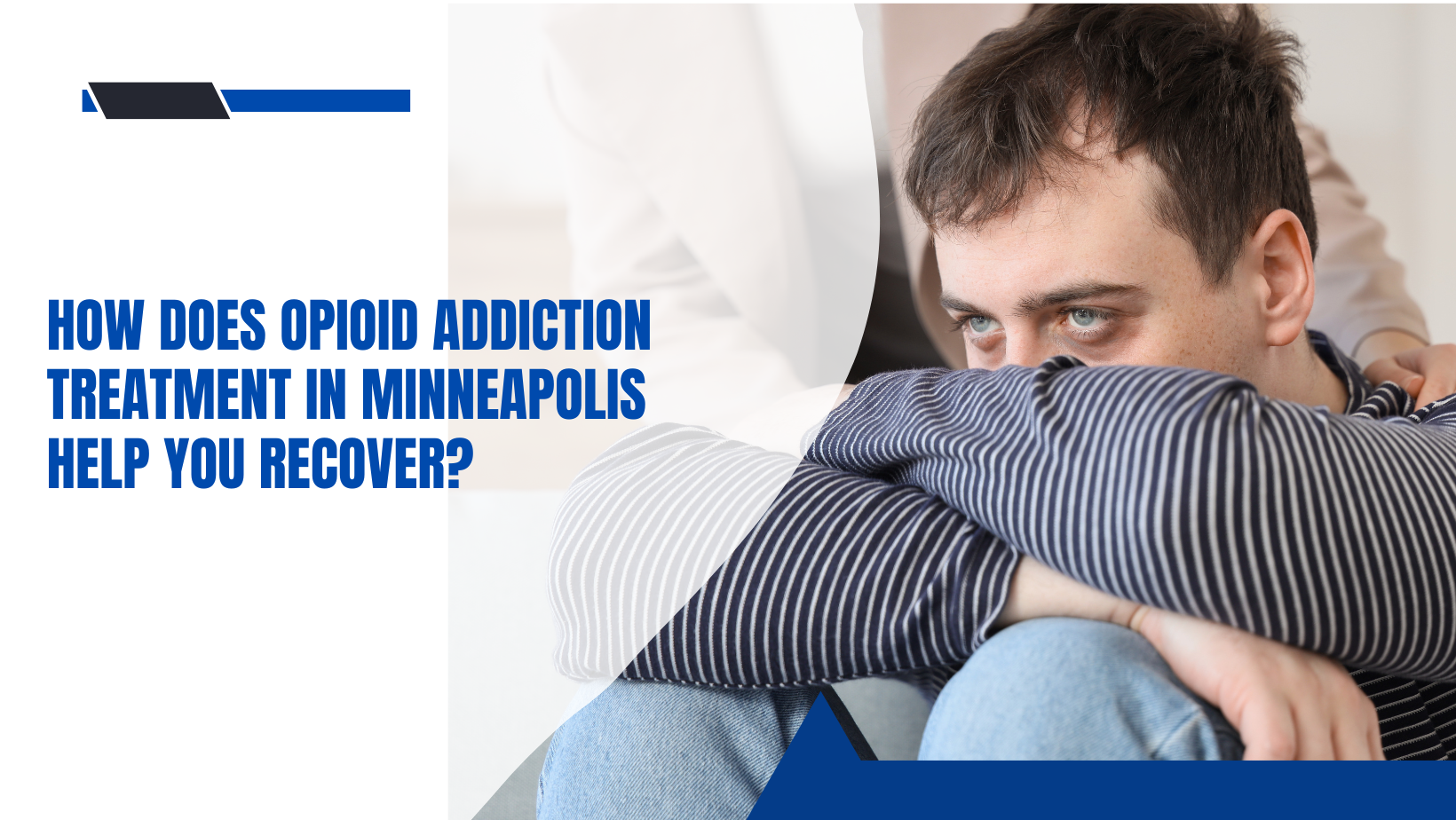
This article will cover the specifics of treatment of opioid addiction in Minneapolis, explain why medication-assisted therapy is so much better than a willpower approach, and reveal the timeline of successful therapy.
Opioid Addiction Treatment in Minneapolis – What It Really Entails
The best way to treat opioid addiction involves FDA-approved medicine, therapy and constant clinical accountability. Detoxification is not treatment; it’s just the beginning. Programs that stop at detox see high relapse rates because withdrawal ends long before the brain’s opioid receptors return to normal function.
The Three Components That Do the Real Work
- Medication (MAT). Both buprenorphine (Suboxone) and naltrexone will help with the cravings and withdrawal effects so that you are able to carry out your daily activities and allow your brain to heal. Buprenorphine has been in clinical use since 2002.
- Therapy. CBT and DBT teach you to catch the thought patterns that precede use. EMDR and trauma-informed care address what started the use in the first place — because for a large share of patients, the substance was solving something.
- Ongoing accountability. Weekly visits to the clinician who knows your personal background. This is the part everyone neglects, and it is the part that determines if the fourth month will be like the first.
Why Medication Changes the Odds
A landmark 2017 BMJ meta-analysis of opioid substitution therapy found that patients retained on buprenorphine or methadone had substantially lower all-cause and overdose mortality than patients who were out of treatment. Put plainly: staying on medication keeps people alive while the rest of the work happens.
Regardless of the above facts, a majority of drug addiction treatment centers in the United States do not provide MAT and also do not treat anxiety or depression. That gap matters. Untreated mental health conditions are one of the most reliable predictors of relapse.
How Treatment Rebuilds Your Life, Not Just Your Sobriety
Stopping opioid use is the entry point, not the goal. True opioid recovery involves living a life where you don’t need to numb out – good sleep, good employment, good relationships that aren’t based on keeping your dirty little secret.
The Way the First 90 Days Normally Go
The literature is clear on this one; more time means better results, with a 90-day mark serving as a minimum threshold.
- Weeks 1–2: Medication induction and stabilization. Cravings drop noticeably. Sleep is usually still rough.
- Weeks 3–8: Dose adjustments, therapy begins doing real work, and old triggers start showing up in daily life.
- Weeks 9–12+: Routines rebuild. This is when people often feel fine and consider stopping treatment, which is exactly when the risk spikes.
Common Mistakes That Derail Recovery
- Tapering off medication too early because sobriety feels stable. Feeling good is an indication that the medication is doing its job, but not that you’ve completed the job.
- Treating the addiction and ignoring the depression, ADHD, or trauma underneath it. One without the other tends to fail.
- Choosing a program based on how fast it promises results. Thirty-day fixes sell well. They don’t hold up.
- Waiting for a “good time” to start. There isn’t one. Custody hearings, probation dates, and job schedules are reasons to start, not to wait.
This is where telehealth has genuinely shifted access in the Twin Cities. Overcoming Addictions LLC provides fully online opioid treatment in Minneapolis: no commute, no waiting room, no one from your neighborhood seeing your car in the lot. Founded in 2019 by Dr. Fred Everett, who has treated addiction and chronic pain patients since before buprenorphine reached the U.S. market, the practice combines medication-assisted treatment with CBT, DBT, EMDR, and motivational interviewing, plus weekly video visits and 24/7 MD support. Care is capped at $63 per week without insurance, and the team is licensed to prescribe directly, which many telehealth providers cannot do.
FAQs
How successful is treatment for opiate addiction?
There is no overall statistic available in the US, since “recovery” is defined differently from study to study. According to the National Institute on Drug Abuse, relapse rates for drug use disorders are around 40-60%, which is similar to rates for asthma and hypertension. Retention is the key – people who stick to buprenorphine treatment for one year or more do much better than those who leave earlier.
Is it possible to recover completely from opioid addiction?
Yes – people live decades in stable recovery, working, parenting, and thriving. As far as the clinical approach goes, opioid use disorder is seen as a disease that can be kept in remission but not necessarily cured. It’s not a matter of pessimism but of being able to remain in touch with people and not feel like they have become invincible.
Why do people go into rehabilitation programs?
There are five primary motivators for most people when they go to rehab: an overdose or near-overdose experience, family and/or partner pressure, legal problems related to driving under the influence, potential loss of job or child custody, and plain weariness with the process.
Do I need to quit before I can get treatment?
No. Buprenorphine induction typically begins during early withdrawal, not after prolonged abstinence. Reach out while you’re still using – your provider will time the start safely.
Is insurance coverage available for OUD in Minnesota?
Most insurance plans do provide some form of medication-assisted treatment due to parity laws. The maximum out-of-pocket expense is set by Overcoming Addictions to be $63 per week.
Conclusion
Opioid use disorder is a treatable medical condition, not a character failure, and the treatments that work best are the ones combining medication, therapy, and consistent human contact over months rather than weeks. Minneapolis overdose deaths fell 26% in a single year in part because more people got access to that combination.
If you’re reading this at 2 a.m. wondering whether it’s worth trying again, the honest answer is that the odds are better than the last time you tried, provided you use an approach built on evidence rather than white-knuckling.
Book a free confidential assessment with Overcoming Addictions LLC, or call 833-811-9111. No commute, no waiting room, and no judgment about how many times you’ve started over.
Also read:
Drug and Alcohol Counseling Online: 10 Benefits Worth Knowing Before You Start